
In today’s AI-driven search environment, Google doesn’t just read your content—it maps relationships between pages. Without a clear structure, your site becomes invisible.
This guide gives you a proven framework for internal linking for SEO that helps Google understand, rank, and prioritize your content.
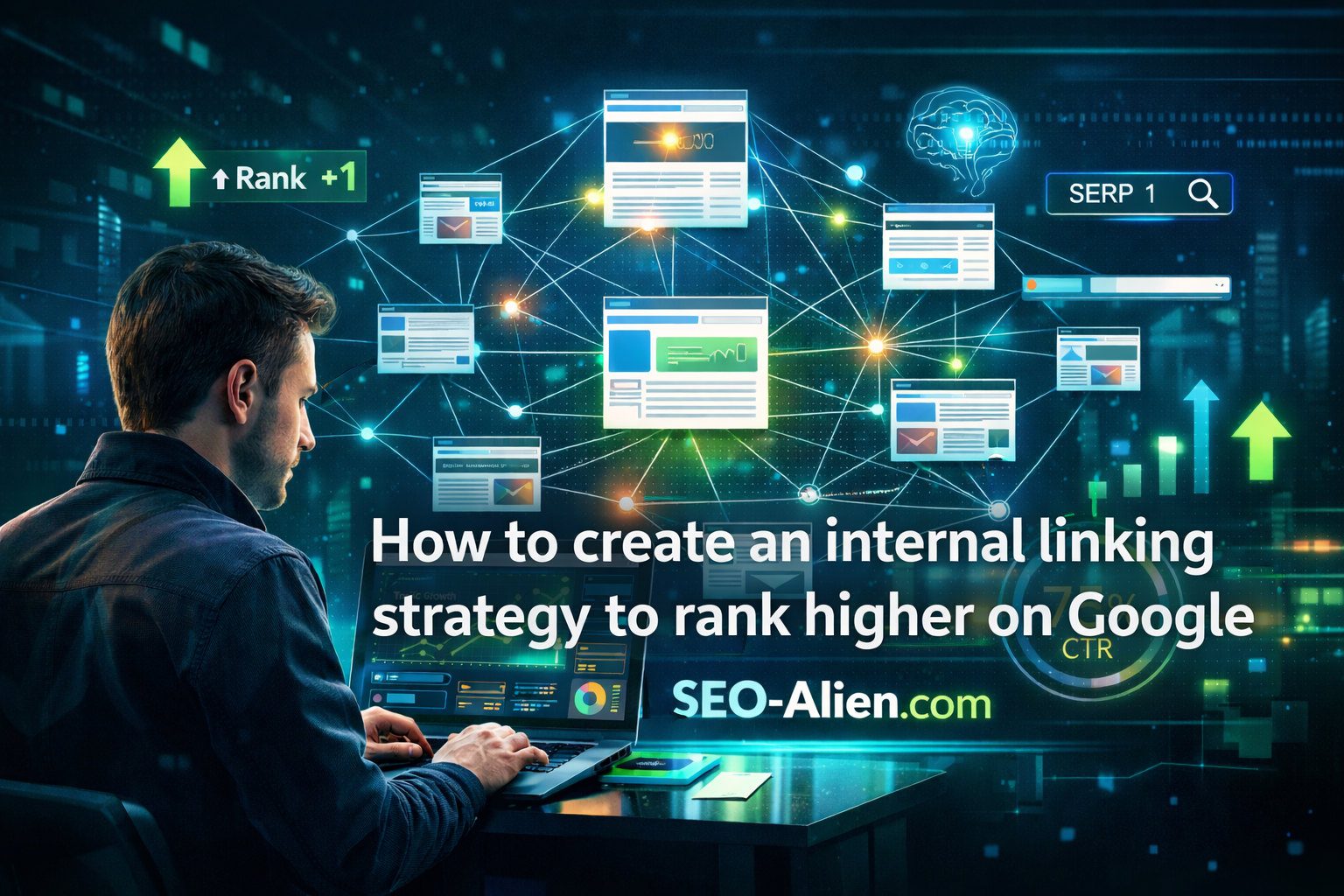
The Core Problem: Why Most Websites Don’t Rank
Most online marketers focus on keywords, content, and backlinks—but ignore how their pages connect.
- Important pages are buried too deep
- No clear topic hierarchy
- Random internal links with no strategy
- Google can’t determine your authority
Result? Lower rankings, slower indexing, and missed traffic.
The Goal: Build a Google-Friendly Internal Linking System
Your goal is simple:
Create a structured internal linking system that signals authority, improves crawlability, and boosts rankings.
This is how you compete in modern SEO.
The 4-Part Internal Linking Strategy Framework
1. Create Topic Clusters (Your SEO Foundation)
Instead of random blog posts, organize your content into clusters.
- Pillar Page: Broad topic (e.g., SEO Strategy)
- Cluster Pages: Supporting content (e.g., on-page SEO, technical SEO, internal linking)
Each cluster page should link back to the pillar page—and to each other where relevant.
This builds topical authority and tells Google:
“This site owns this topic.”
2. Use Strategic Anchor Text
Anchor text is a ranking signal—not just a clickable phrase.
Best practices:
- Use descriptive, keyword-rich anchors
- Avoid generic text like “click here”
- Keep it natural and readable
Example:
Learn more about our Modern SEO Tactics That Drive Page-One Google Rankings to improve your rankings.
3. Control Link Depth (Critical for Rankings)
Google prioritizes pages that are closer to your homepage.
Key rule:
Important pages should be reachable within 3 clicks.
If your money pages are buried, they won’t rank.
4. Distribute Authority (Link Equity)
Every page on your site has value. Your job is to distribute it.
- Link from high-traffic pages to important pages
- Support new content with links from existing posts
- Update old posts with fresh internal links
This boosts rankings without needing new backlinks.
How Internal Linking Works in AI-Driven Search
Google’s AI doesn’t just rank pages—it understands relationships.
A strong internal linking strategy helps you:
- Get featured in AI-generated answers
- Improve semantic relevance
- Increase chances of appearing in zero-click searches
This is how modern SEO works.
Internal Linking Structure Example
Your structure should look like this:
- Pillar Page → Links to all cluster pages
- Cluster Pages → Link back to pillar
- Cluster Pages → Cross-link to related content
This creates a web of relevance that Google rewards.
Common Internal Linking Mistakes
- Too many links on one page
- Ignoring anchor text strategy
- Orphan pages (no internal links)
- Linking without context
Fix these, and you’ll often see ranking improvements quickly.
How to Implement This on WordPress
If you’re using WordPress, execution is simple:
- Use categories to define topic clusters
- Add internal links while writing content
- Update older posts regularly
- Use SEO plugins to monitor structure
Need help? Explore our Content Marketing Category and discover modern solutions to optimize your entire website.
Final Thoughts: Build Systems, Not Random Links
If you want to rank higher on Google, stop thinking in terms of “links” and start thinking in terms of systems.
A strong internal linking strategy:
- Improves rankings
- Boosts crawlability
- Supports AI-driven search visibility
- Increases traffic without new content
The best part? You control it 100%.
Start implementing this framework today—and turn your website into a ranking machine.

About the Author:
The SEO-Alien is a project started in 2009 regarding all things online marketing. The site started out more of a diary of predictions, suggestions and references to things I frequently used for online marketing... before social media marketing was even an option.
I hope you find the information and tools presented here useful and something worth sharing with others.
If there is anything else about online marketing or any online advertising strategy you think would be helpful, please let me know.

.png)