
Search has changed forever. If you are still relying entirely on old-school keyword stuffing and basic backlink strategies, your traffic is likely taking a hit.
In 2026, Google AI Mode and AI Overviews dominate the top of the search engine results pages (SERPs).
Users no longer just look for links; they ask complex questions and receive immediate, AI-synthesized summaries. To stay visible, marketers must pivot toward Generative Engine Optimization (GEO).
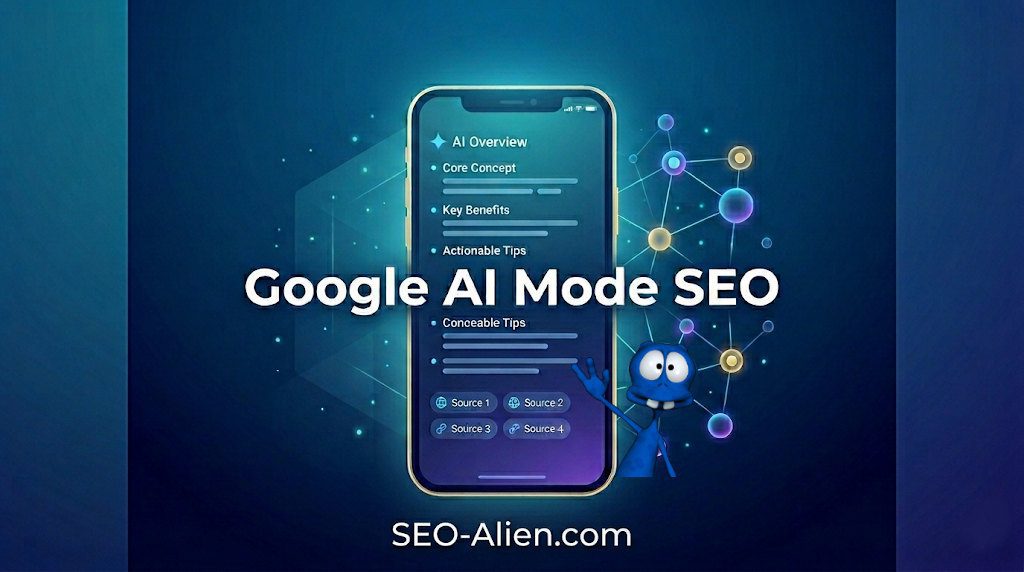
This guide breaks down exactly how to adapt your strategy for Google AI Mode SEO so your brand remains the source Google trusts.
What is Google AI Mode and Why Does It Matter?
Google AI Mode is the fully conversational, generative search environment built right into the traditional search landscape. At the heart of this experience are Google AI Overviews—dynamic, multi-source answers compiled by Google's Gemini model that sit directly at the top of competitive search queries.
Instead of clicking through to three different websites, a user gets a consolidated answer instantly. The good news? These summaries actively cite their sources with prominent link cards. If you want to maintain organic traffic, your goal is to land inside those citations.
Actionable Strategies for Google AI Overviews SEO
Learning how to rank in AI search requires shifts in content structure and technical optimization. AI models do not read content the way old crawler bots did; they look for direct answers, structured facts, and deep authority. Use the following framework to optimize your site.
1. Optimize for Conversational and Long-Tail Queries
People interact with AI search engines using natural language. Instead of typing "best SEO tools," users ask, *"What are the best SEO tools for a small e-commerce business on a tight budget?"*
- Target multi-word, highly specific long-tail keyphrases.
- Frame your headers as direct questions (Who, What, How, Why).
- Provide an immediate, concise summary right under the header before diving into deep paragraphs.
2. Implement Rigorous Data and Structuring
Generative models love structured, easily digestible formats. They scrape tables, bulleted lists, and step-by-step guides to build their answers.
- Use bullet points to summarize key takeaways.
- Build clean HTML tables to compare data points or pricing metrics.
- Keep your code pristine, ensuring that search engines can easily parse your primary text.
3. Double Down on Digital Trust and Authority (E-E-A-T)
Google explicitly screens its AI Overview citations to avoid serving misinformation. Your Experience, Expertise, Authoritativeness, and Trustworthiness (E-E-A-T) matter more than ever. Ensure your content features real-world examples, unique quotes, and data-backed case studies that an AI cannot simply fabricate.
To deepen your baseline optimization rules before diving into advanced AI frameworks, read our comprehensive guide on SEO Optimization basics to make sure your core technical footprint is flawless.
The Technical Edge: Speed and Reliable Infrastructure
You can have perfect AI search optimization, but if your website takes too long to load or experiences frequent downtime, Google's real-time indexes will skip over your pages. Fast, secure web hosting is a fundamental ranking factor for modern generative search engines which rely heavily on rapid rendering.
Boost Your Site Speed for AI Search with Premium WordPress Hosting
Measuring Success in the Age of Generative AI Search
Traditional rank tracking tool metrics are evolving. Tracking success in 2026 means monitoring your digital share of voice within AI-driven summaries. Keep a close eye on your Google Search Console impressions and check for referral traffic spikes that align with highly specific, conversational search terms.
For official documentation on how Google parses and displays automated content globally, review the Google Search Central Guidelines to align your publishing standards perfectly with their algorithmic updates.
Final Thoughts on the Future of SEO
Worrying about AI replacing organic traffic will not protect your business, but adapting your content will. By focusing heavily on user intent, optimizing for direct answers, and maintaining a fast website, you can successfully position your site directly inside Google's AI Mode results.
 About the Author:
The SEO-Alien is a project started in 2009 regarding all things online marketing. The site started out more of a diary of predictions, suggestions and references to things I frequently used for online marketing... before social media marketing was even an option.
I hope you find the information and tools presented here useful and something worth sharing with others.
If there is anything else about online marketing or any online advertising strategy you think would be helpful, please let me know.

.png)